Before You Go
Prepare for your safari.
A practical guide to help you arrive ready — what to bring, what to wear and what to expect from the bush.
On this page
The journey begins long before you arrive.
There is something wonderfully exciting about preparing for Africa — choosing what to pack, charging the camera batteries, finding that well-worn safari hat and beginning to imagine the days ahead.
This guide is here to take care of the practical details, so that when the time comes, you can simply close your bag, leave the everyday behind and come ready to experience Africa.
Pack lightly. Come curious. Africa will take care of the rest.
Section
When to Come
The time of year plays an important part in how we plan our safaris, with each destination offering its own seasonal experiences.
Okavango & Northern Botswana
We run our safaris through the Okavango and Northern Botswana from April through to the end of November. The coolest months are June, July and August, when the days are generally pleasantly warm, while early mornings, evenings and nights are generally chilly.
Zebra Migration — Botswana
Our Zebra Migration Safaris run from March through to May, with distinct, set departure dates throughout this period. These journeys are timed to follow the seasonal movement of the zebra through the Nxai Pan and Makgadikgadi region, as the green season gradually gives way to the drier months. Large numbers of zebra move together in herds across the landscape and many young foals can be seen during this season.
Uganda — Gorillas, Chimpanzees & Wildlife
Our Uganda safaris are timed around the country's drier seasons, offering excellent conditions for mountain gorilla and chimpanzee tracking, together with wildlife viewing in Queen Elizabeth National Park. We offer selected departures during December, January and February, as well as early June and late August. These periods provide a wonderful balance of primate encounters, game viewing and generally favourable conditions for travelling and photography.
Please enquire for specific departure dates for all safaris.
Section
Wildlife & Game Viewing
Wildlife viewing and photography require both time and patience. We never want to rush an encounter simply to move on to the next sighting. Spending time observing an animal and understanding its behaviour often rewards us with the most memorable experiences — and the best photographic opportunities.
A good pair of binoculars is highly recommended, even for photographers. For photography, we recommend bringing both a telephoto lens for wildlife and a wider lens for landscapes, animals within their environment and the extraordinary skies and scenery of Africa.
Okavango & Northern Botswana / Zebra Migration
Our days in Botswana often begin before dawn. The early morning light offers beautiful opportunities for silhouettes and backlit photography, while the cooler hours are also when predators are often at their most active.
We take a tea and coffee box with us for a mid-morning break, accompanied by biscuits or traditional rusks. On some days we carry a picnic lunch, allowing us to remain out in the wilderness rather than returning to camp. Evenings offer another wonderful photographic window, with changing light, dramatic landscapes and increased wildlife activity as the heat of the day begins to fade.
Uganda — Gorillas, Chimpanzees & Wildlife
Our Uganda safari has a very different rhythm, with a wonderful variety of experiences throughout the journey. At the heart of the safari is the extraordinary experience of trekking into the forests to spend time with the mountain gorillas — an encounter that, for many, becomes one of the most unforgettable wildlife experiences of their lives.
Chimpanzee trekking is another highlight of the journey, offering a fascinating and very different primate experience. Along the way, we explore Uganda's wildlife through game drives, birding and other activities, while also enjoying lovely cultural encounters as we travel through this unique and breathtakingly beautiful country.
Accommodation is in carefully selected lodges throughout the journey. Breakfasts and dinners are generally enjoyed at the lodges, while some lunches are taken en route depending on the day's activities and travel schedule.
Section
Visa & Passport Requirements
Botswana
Your passport should be valid for 6 months after your departure date. A number of countries don't require a visa to enter Botswana — please check with your nearest Botswana embassy.
On arrival you will be issued with a tourist visa valid for a maximum of 90 days per annum. If you are travelling on to Zimbabwe or Zambia after your time with us, you will need to pay for a visa at the Kazungula border crossing (around USD 40). We recommend keeping approximately USD 50 tucked away for this.
Uganda
Travellers requiring a visa to enter Uganda must apply online and receive their Visa Approval/Travel Authorisation before travelling. Visas should not be relied upon as being available on arrival.
Your passport must be valid for at least six months. Visa requirements vary according to nationality, so please check the current requirements well in advance of departure.
Applications should only be made through the official Uganda Immigration e-Visa portal:
Section
Health, Malaria & Yellow Fever
Health. We carry a basic first aid kit in all our vehicles and our guides have first aid training. If you take regular medications, please bring enough for the duration of your trip and keep them in your hand luggage.
Malaria. You will be travelling to a malaria zone. Contact your GP or health provider and follow their recommendations. Malaria prophylaxis allows you flexibility and comfort during travel.
Uganda
A valid Yellow Fever Vaccination Certificate is required for entry into Uganda and should be carried with your travel documents.
Uganda is a malaria-risk country and malaria prevention is recommended. Please consult your doctor or travel-health provider well before departure regarding the most suitable malaria prophylaxis for you. We also recommend taking the usual precautions against mosquito bites, including insect repellent and protective clothing, particularly in the evenings.
If you take regular medication, please bring sufficient supplies for the entire journey and carry essential medication in your hand luggage.
Section
What to Pack
Botswana
Neutral, earth-toned clothing is ideal for safari — khaki, stone, olive, beige and grey all work well. Avoid bright colours and camouflage clothing. Lightweight, breathable fabrics are most comfortable during the day and long-sleeved shirts provide useful protection from both the sun and insects.
Botswana enjoys glorious sunny days, but the African sun can be unforgiving. At some point everyone ends up in the “sunny seat”, so bring a good sunscreen, sunglasses and a wide-brimmed hat.
A comfortable pair of walking shoes with sturdy soles is recommended, together with sandals or other comfortable shoes for around camp. Botswana has some impressive thorns, so very thin-soled footwear is best avoided.
During the warmer months, lightweight shirts, T-shirts, shorts and comfortable trousers are generally all you need. Long trousers and long sleeves are useful after sunset when mosquitoes become more active.
During the winter months of June, July and August, early mornings, evenings and nights can be surprisingly cold. Bring a warm fleece or jacket, windbreaker, gloves, a warm hat or beanie and something to protect your neck from the cold air during early morning game drives. We provide blankets in the vehicles, but layers are essential as the days generally warm up considerably once the sun is higher.
Uganda
Uganda is generally warm during the day, so lightweight, comfortable clothing is ideal for much of the journey. For gorilla and chimpanzee trekking, however, you will need to dress specifically for the forest.
Bring long trousers and long-sleeved shirts, together with long socks that can be pulled over the bottom of your trousers for additional protection from insects and ants. Lightweight gloves are useful for protecting your hands from nettles and vegetation and a lightweight waterproof jacket or poncho is essential as rain can occur at any time in the forest.
Most importantly, bring a good pair of sturdy, comfortable hiking boots with reliable grip. Make sure they are well broken in before you travel — a gorilla trek is not the ideal place to discover that your beautiful new hiking boots give you blisters.
The higher-altitude forest areas can be cool and damp, so carry a warm fleece and a change of clothing in your day pack. A wide-brimmed hat, sunscreen and insect repellent should also form part of your everyday safari kit.
Section
The Weather
Botswana
Summer (Sep–April) is when our rains come. During the day the clouds build for a late-afternoon shower, with the heaviest rain in December. Bring a waterproof poncho or raincoat for surprise showers.
Winter (May–Aug) can be very chilly. It can drop below 0°C at night, but daytime temperatures can still reach 25–30°C (77–86°F). Layering is the easiest way to cope with the temperature swings.
Uganda
Climate
Average year-round temperatures: 14°C to 27°C
Rainy seasons: March to May and September to December
Section
Luggage
Botswana
Soft bags are always preferred when it comes to safari arrangements. Flights between Johannesburg and Botswana have a luggage weight restriction of 20kg. A duffel or soft bag is highly recommended as it packs more easily into the vehicle. Please pack fragile items in your day pack.
Uganda
For Uganda, a soft-sided duffel or bag is also the most practical choice, especially when moving between lodges and airstrips. Please keep luggage within any advised weight limits and pack fragile or valuable items in your day pack.
Section
The Vehicle
Botswana
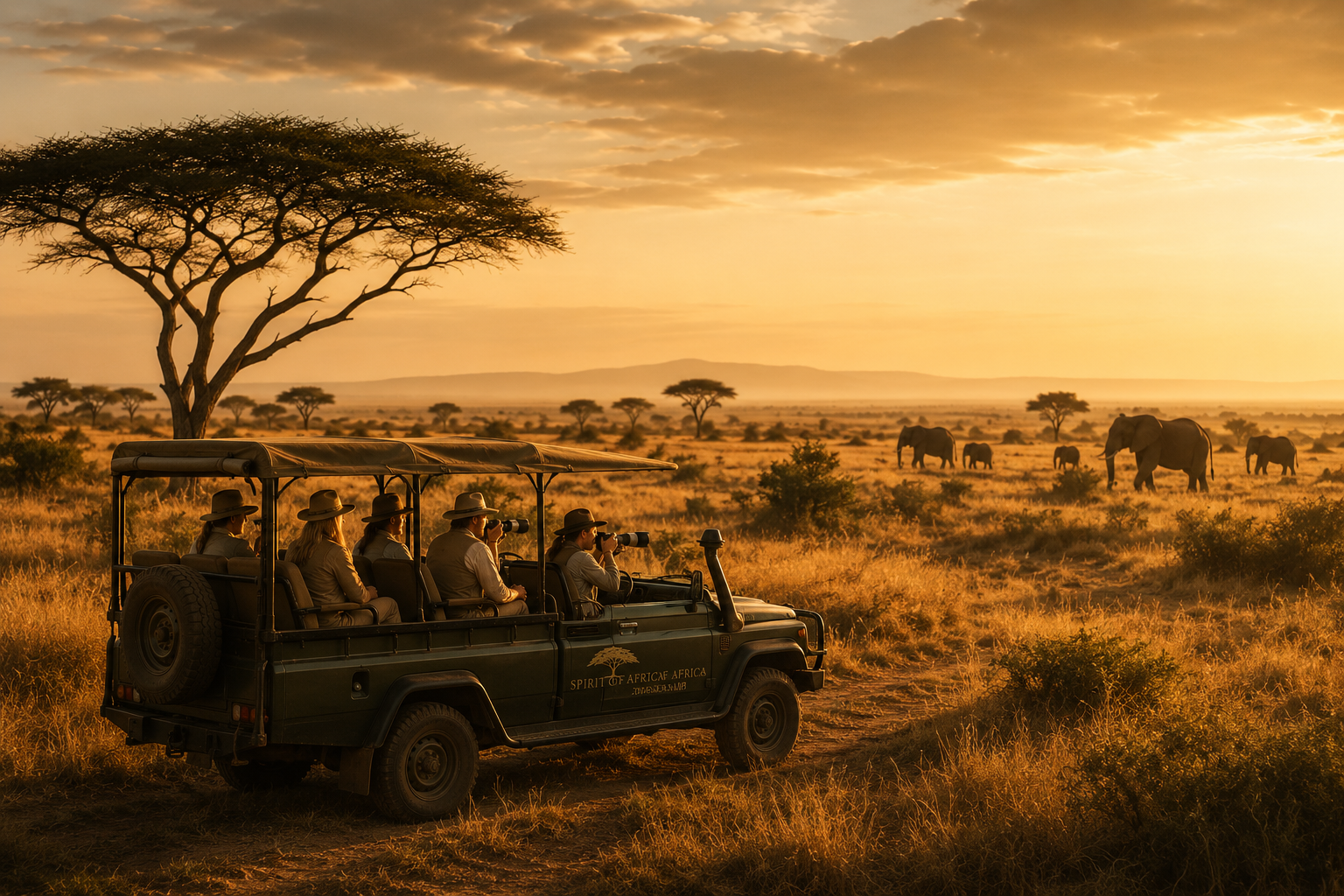
For your journey through Botswana you will be driven in what we call a 'Safari Limo' — a Land Rover/Cruiser game viewer. These are specially adapted vehicles with a frame on the car and bench seats to give you maximum space and view of the landscapes and wildlife.
If you suffer from back problems or have mobility issues, please let us know in your enquiry so we can help.
Uganda
Throughout our Uganda journey, we travel in comfortable 4×4 safari vehicles, with the size of the vehicle selected according to the number of guests travelling.
Vehicles are spaciously allocated to ensure that every guest has their own window seat — particularly important for wildlife viewing and photography. For larger groups, a 9-seater safari vehicle may be used.
Section
Electronics
Botswana
iPads, Kindles, laptops, digital cameras — our lives are dominated by electronics and travelling to remote parts of Botswana makes electricity hard to come by. Have no fear: we charge your batteries using inverters hooked up to the vehicle (220V).
Please double-check your equipment works at 220V (some require 110/120V). Also grab an M-type South African plug adapter — these have three round prongs.
Uganda
Uganda mainly uses the British Type G plug — the one with three rectangular/flat pins arranged in a triangle. So for phones, camera chargers, laptops, battery chargers etc., guests should bring a Type G (UK) travel adapter. Uganda uses 240 V / 50 Hz.
Section
Money
Botswana
The local currency is Pula, but Dollars and Euros are easily exchangeable and required if you travel to Victoria Falls in Zambia or Zimbabwe.
Uganda
Uganda’s unit of currency is the Uganda Shilling and you’d be advised to get some on arrival as it is far easier to buy drinks, curios and meals in the local currency when travelling between destinations.
US Dollars are widely accepted throughout the country though note that cash is best: traveller’s cheques and credit cards can be used at most lodges and in Kampala but attract hefty transaction fees.
Botswana and Uganda Tipping
Tipping of around 10 – 15% is customary in both Uganda and Botswana for good service. Tips in Uganda are usually given in Uganda Shillings or US Dollars; in Botswana, tips are usually given in Pula and US Dollars. If you are doing a gorilla trek, tipping is at your discretion – your porter (if you choose to take one) should usually receive the highest tip, with a second tip distributed between your guides, trackers and security personnel.
Section
Books & Other Information
Reference books on the birds, mammals and other wildlife of the region are available in our safari vehicles in both Botswana and Uganda, making it easy to identify and learn more about the species we encounter along the way.
If you enjoy having your own reference material at hand, you are of course welcome to bring your favourite field guides. Digital birding apps such as eBird are also excellent companions and particularly useful for keeping track of your sightings.
And finally, don't forget a good novel. There are few better places to read than during a quiet afternoon in camp or at the end of a day in the African wilderness.